Blog
Nov 2026
Why Does Rosacea Flare Up? Understanding Your Skin’s Triggers
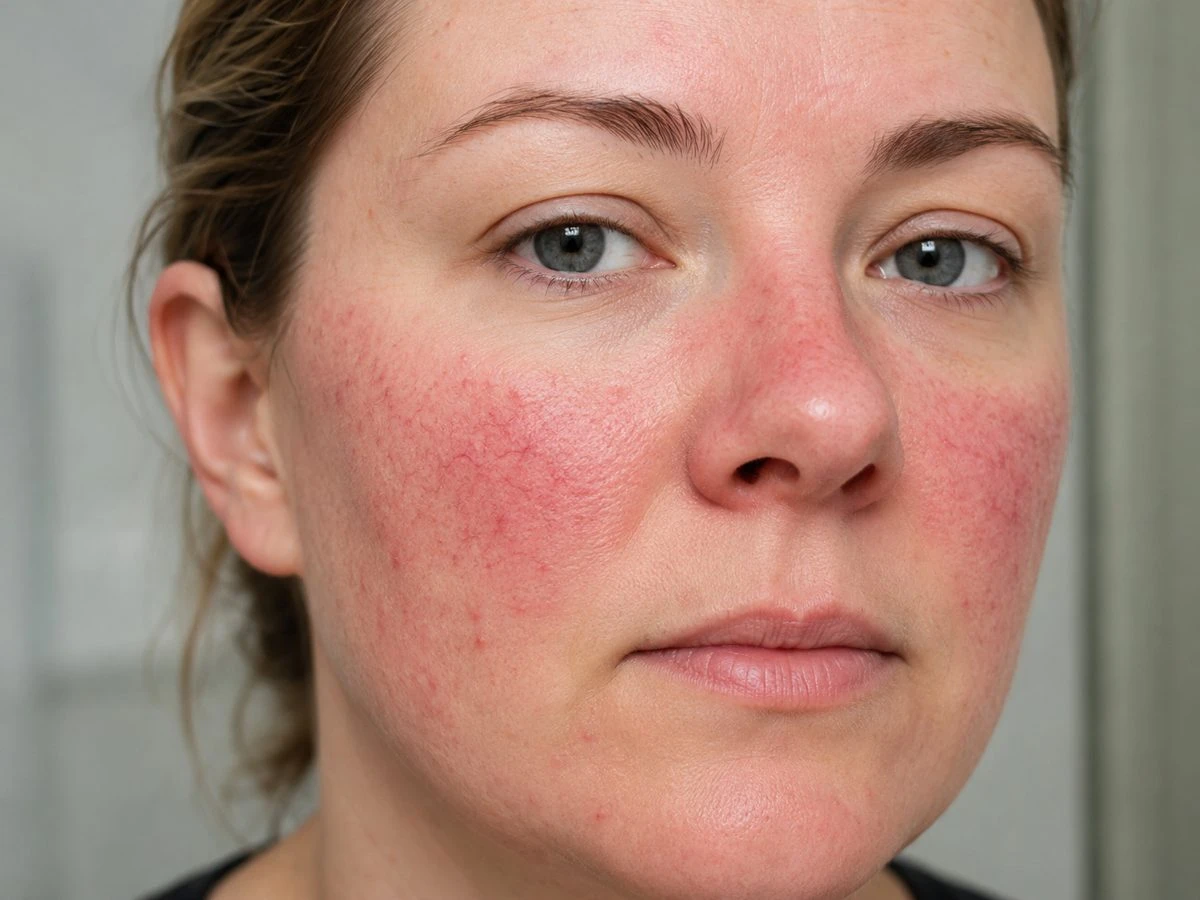
Rosacea does not always behave predictably. Your skin may feel relatively calm for several weeks, only for redness, warmth or sensitivity to become noticeably worse after a sunny afternoon, a stressful few days, a change in skincare or even a particular meal.
For some people, flushing settles relatively quickly. For others, redness gradually becomes more persistent, visible blood vessels begin to appear or inflammatory spots develop alongside increasingly sensitive skin.
This fluctuating nature is part of what can make rosacea difficult to understand and manage. It is a chronic inflammatory skin condition, but its appearance can be influenced by several processes occurring within the skin as well as the triggers encountered in everyday life.
At Dr Liesel Medical Aesthetics, managing rosacea therefore involves more than treating redness when it appears. We look at how reactive the skin is, the health of its protective barrier, patterns in your flare-ups and the lifestyle or environmental factors that may be contributing.
What Is Your Rosacea Trying to Tell You?
Understanding when your skin becomes more reactive can provide useful information about what may be contributing to your flare-ups.
Triggers vary considerably between individuals, so keeping an eye on patterns can be more useful than trying to avoid every commonly reported rosacea trigger.
Does Your Face Flush When You Become Hot?
Heat is a common trigger for rosacea-prone skin. Hot weather, vigorous exercise and other situations that raise body temperature may increase facial flushing in susceptible individuals.
Cold weather can also be problematic, particularly when the skin is moving repeatedly between cold outdoor temperatures and warmer indoor environments.
Does Your Skin React After Time Outdoors?
Sun exposure is another common rosacea trigger. For someone already experiencing vascular reactivity and inflammation, UV exposure may contribute to increased redness and flare-ups.
This makes appropriate daily sun protection particularly important within long-term rosacea management, rather than something reserved for particularly sunny days.
Have You Noticed a Connection With Food or Alcohol?
Alcohol, spicy foods and certain inflammatory foods may worsen symptoms for some people. This does not mean that everyone with rosacea needs to follow the same restrictive diet, as individual responses can differ considerably.
Where appropriate, we may discuss lifestyle factors as part of a wider assessment, including dietary patterns and supporting a healthier gut microbiome. The objective is to identify relevant patterns for the individual rather than assume that every possible trigger applies.
Does Stress Show Up on Your Skin?
Emotional stress can be associated with rosacea flare-ups in some people. This may be particularly noticeable during periods when flushing, sensitivity and inflammation already feel difficult to control.
Stress is not the sole cause of rosacea, but recognising it as one potential influence can help build a more complete picture of why symptoms fluctuate.
Does Your Skincare Sting or Make Redness Worse?
Rosacea-prone skin is often sensitive, particularly when the protective skin barrier is compromised.
Products that might be well tolerated by someone else’s skin can cause stinging, dryness or increased redness in skin that is already reactive. Frequently changing products or using an unnecessarily complicated routine can also make it more difficult to determine what the skin tolerates well.
For this reason, rosacea skincare is not simply about adding products designed for redness. Supporting the skin barrier and reducing unnecessary irritation can be equally important.
Why Is the Skin Barrier So Important in Rosacea?
The skin barrier forms the protective outer layer that helps retain moisture while limiting exposure to external irritants.
When this barrier is not functioning effectively, the skin can become more vulnerable to moisture loss, environmental changes and ingredients that might otherwise be tolerated. The result may be increased dryness, sensitivity, stinging or reactivity.
This creates an important consideration when managing rosacea. Before introducing more intensive treatments, it may be appropriate to focus on improving the condition of the skin itself.
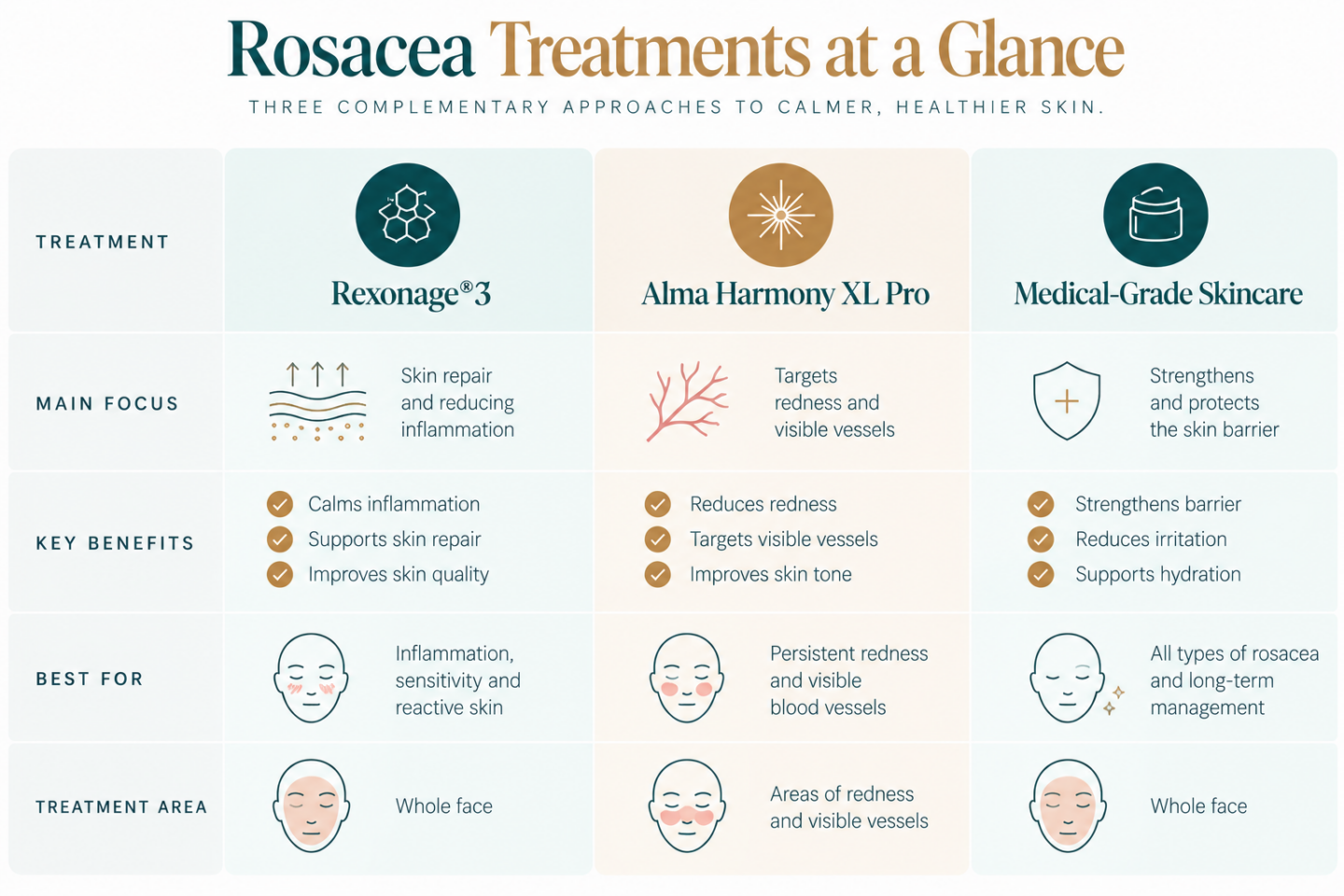
Medical-grade skincare can therefore form an important part of rosacea management. Products are selected according to the individual skin, with the aim of supporting hydration, barrier function and resilience without unnecessarily aggravating sensitivity.
What If Redness Has Become More Persistent?
For some people, rosacea initially presents as intermittent flushing but becomes more persistent over time. Visible facial blood vessels may also become increasingly noticeable.
When vascular redness is a significant component of the condition, Alma Harmony XL Pro may be considered.
The platform uses laser and light-based technologies that can be selected to target vascular concerns such as persistent redness and visible vessels. Treatment needs to be tailored carefully to the individual skin, particularly when rosacea is accompanied by sensitivity or active inflammation.
This is why vascular treatment is considered within the context of the overall condition rather than treating redness in isolation.
Can Regenerative Treatment Have a Role in Rosacea?
Where inflammation, sensitivity and compromised skin quality are prominent features, supporting the health of the tissue itself may also form part of the treatment strategy.
Rexonage®3 is a regenerative treatment designed to support skin repair and overall tissue quality. Its anti-inflammatory and regenerative properties may make it relevant where rosacea is associated with inflammation, sensitivity and a compromised skin barrier.
Its role is different from vascular treatment. Rather than specifically targeting visible blood vessels, the focus is on supporting healthier, more resilient skin.
This distinction is important because different features of rosacea may require different approaches.
How Do We Build a Rosacea Management Plan?
A bespoke skin consultation allows us to look beyond the redness that is visible on the day of your appointment.
We consider how your rosacea behaves over time, the symptoms you experience, your known or suspected triggers, the condition of your skin barrier, your current skincare and any previous treatments you have tried.
Your medical history is also important because facial redness and sensitivity can have different causes, and symptoms should not automatically be assumed to be rosacea without appropriate assessment.
From there, your plan may include carefully selected skincare, lifestyle guidance and, where appropriate, regenerative or laser and light-based treatments.
Regular review can also be valuable because rosacea can change over time. A routine that works well while the skin is calm may need to be reconsidered if symptoms or triggers change.
Can Rosacea Be Cured?
Rosacea is a chronic condition, so treatment is focused on management rather than promising a permanent cure.
With an appropriate approach, it may be possible to reduce symptoms, improve skin health and make flare-ups easier to manage. This often involves understanding the combination of factors affecting your individual skin rather than searching for one treatment capable of addressing everything.
Long-term management may include protecting the skin barrier, identifying relevant triggers, using appropriate skincare and addressing specific concerns such as persistent vascular redness when clinically appropriate.
Frequently Asked Questions
Is Rosacea the Same as Sensitive Skin?
No. People with rosacea frequently experience sensitivity, but sensitive skin alone does not necessarily mean that someone has rosacea. Rosacea is a chronic inflammatory condition with features that may include flushing, persistent redness, visible vessels and inflammatory spots.
Why Does My Rosacea Suddenly Flare Up?
A flare-up may be associated with triggers such as UV exposure, temperature changes, alcohol, spicy foods, stress, vigorous exercise or irritating skincare. Individual triggers vary, which is why recognising your own patterns can be useful.
Can I Have Professional Skin Treatments With Rosacea?
Potentially, but treatment needs to be selected carefully. The type and severity of rosacea, current inflammation, skin barrier health and sensitivity should all be considered before recommending an in-clinic treatment.
Can Laser Treatment Help Rosacea?
Laser or light-based treatment may be appropriate when persistent redness and visible facial blood vessels are significant features. Suitability depends on the individual skin and should be assessed before treatment.
Do I Need to Avoid Every Known Rosacea Trigger?
Not necessarily. Triggers vary considerably between individuals, so understanding what consistently affects your own skin may be more useful than trying to eliminate every potential trigger.
Learning What Keeps Your Skin Calm
Living with rosacea can sometimes feel like trying to anticipate what your skin will do next. A more useful approach is to understand the patterns behind those changes and gradually build a routine that supports the skin rather than repeatedly reacting to each flare-up.
At Dr Liesel Medical Aesthetics, we assess the different features of your rosacea alongside your skin barrier, sensitivity, lifestyle, possible triggers and previous treatment history. This allows us to develop a personalised management plan focused on calmer, healthier and more resilient skin over the longer term.
Book a consultation with Dr Liesel Medical Aesthetics to discuss your rosacea and develop an individual approach to managing your skin.