Blog
Nov 2026
Why Is My Neck Ageing Faster Than My Face?
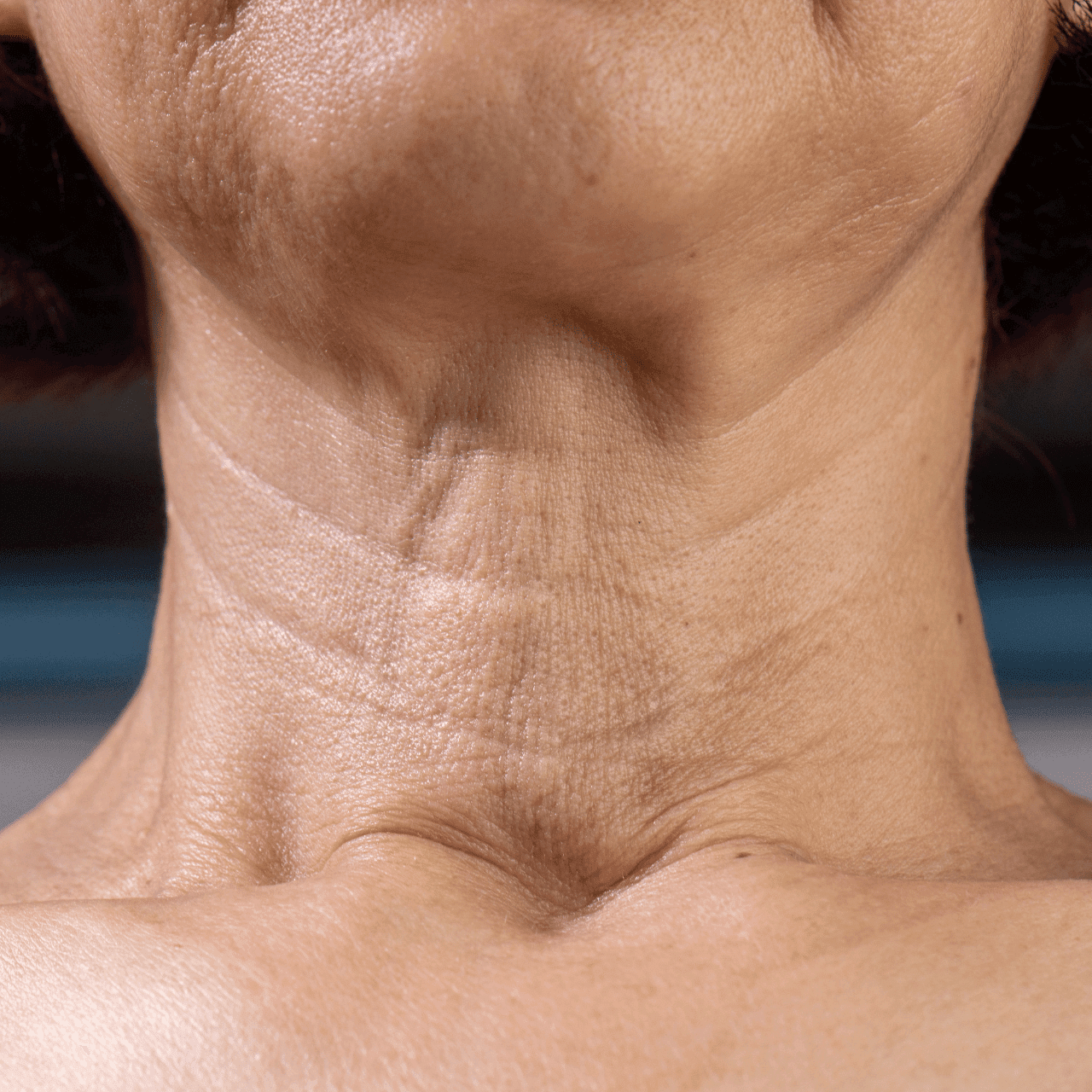
You may take excellent care of your face and still find that your neck seems to be telling a slightly different story. Fine horizontal lines may become more noticeable, the skin can appear thinner or crepier, vertical cords may emerge when you speak or tense your neck, and the once-defined transition between the jawline and neck can gradually soften.
The neck is particularly susceptible to these changes because the skin is thinner, has fewer oil glands and is frequently exposed to the sun. Over time, declining collagen and elastin, repeated movement and cumulative UV exposure can contribute to fine lines, crepiness and reduced firmness. Lifestyle factors such as smoking, dehydration and pollution may also influence skin quality.
Ageing is not confined to the skin, however. Changes in fat distribution, supporting tissues and the platysma muscle can all affect the shape and appearance of the neck. At Dr Liesel Medical Aesthetics, we therefore assess the neck in layers, considering whether the changes are predominantly related to skin quality, muscle activity or deeper structural support before discussing what may realistically help.
Why Do Horizontal Neck Lines Become More Noticeable?
Horizontal neck lines are influenced by both skin quality and the considerable amount of movement the neck performs every day.
Looking down at a phone or computer, turning your head and moving naturally through everyday life repeatedly fold the skin along similar lines. This is sometimes described as “tech neck”, although screens themselves are not the whole explanation. Repeated movement occurs alongside gravity, declining collagen and naturally thin skin, allowing temporary folds to become more established over time.
Where horizontal lines have become more deeply etched, carefully placed dermal filler may be considered to soften their appearance. The effect can last for up to 12 months, although suitability depends on the individual neck and the nature of the lines.
What Are the Vertical Bands at the Front of My Neck?
Vertical neck bands are different from horizontal lines because they are often related to the muscle beneath the skin.
The platysma is a thin sheet of muscle extending from the lower face and jaw towards the collarbones. In younger tissue, it sits more like a smooth curtain beneath the skin. With age, it can shorten, lose its even tone and separate slightly through the midline.
The free edges of the muscle can then become visible as vertical cords, particularly when you speak, grimace or tense the neck. As the surrounding tissues change with age, these bands may eventually become noticeable even when the neck is at rest.
Because the underlying issue is muscle activity rather than simply skin quality, treatments designed to improve hydration or collagen cannot directly address these bands. For suitable patients, carefully placed neuromodulator treatment, including an approach sometimes referred to as a Nefertiti neck lift, may be considered when platysma activity is contributing to the appearance of the neck.
What If My Main Concern Is Crepey Neck Skin?
When thinness, crepiness, dehydration and declining elasticity are the predominant concerns, treatment can focus more closely on improving the quality and resilience of the skin.
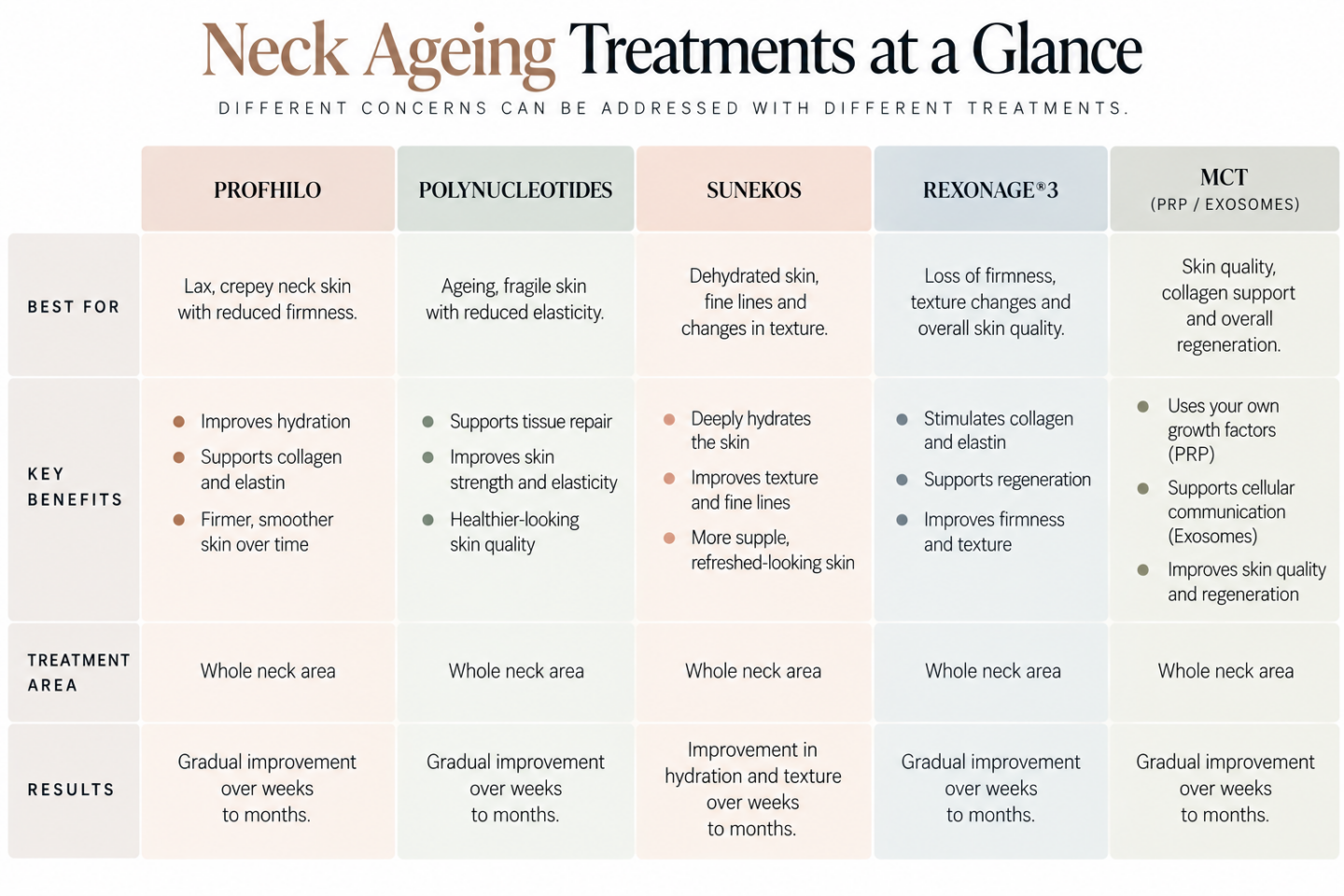
Profhilo is a bio-remodelling treatment containing high concentrations of hyaluronic acid. It can be used to improve hydration while supporting collagen and elastin, making it particularly relevant where neck skin has become less firm or supple.
Polynucleotides take a regenerative approach, supporting tissue repair and collagen production. They may be considered where strengthening the skin and improving elasticity are important treatment goals.
Neither treatment is intended to alter the natural anatomy of the neck. The focus is on gradually improving the condition of the skin itself.
Where Do Skin Boosters Fit In?
When fine lines, dehydration and changes in texture are particularly noticeable, skin boosters such as Skinvive or Sunekos may form part of the treatment plan.
By improving hydration within the skin, these treatments can help neck skin appear smoother, more supple and healthier. They are particularly relevant when the priority is skin quality rather than significant laxity or deeper structural change.
Can Regenerative Treatments Improve an Ageing Neck?
Regenerative treatments provide another option where age-related changes in the quality and resilience of the neck skin are the priority.
Rexonage®3 is designed to support regenerative activity while stimulating collagen and elastin and may be considered where firmness, elasticity and texture have changed with age.
MCT Exosomes are prepared from your own blood and used to support cellular signalling and tissue repair, while MCT PRP is an enhanced form of platelet-rich plasma conditioned to optimise your body’s own growth factors. Both may be incorporated into a personalised plan to support healthier-looking neck skin and regenerative processes over time.
Which approach is most appropriate will depend on the condition of your skin and the changes identified during consultation.
Can You Treat an Ageing Neck Without Surgery?
Many mild to moderate changes can be approached non-surgically, but what can realistically be achieved depends on the layer responsible.
Skin-focused treatments may improve hydration, texture and tissue quality. Dermal filler may have a role in selected horizontal lines, while muscle-related vertical bands require a different approach.
More significant skin excess or deeper structural change is another matter. Non-surgical treatment cannot reproduce the degree of correction that surgery may achieve where substantial laxity is present, and recognising these limitations is an important part of consultation.
Frequently Asked Questions
Why Does My Neck Look Older Than My Face?
Neck skin is thinner, has fewer oil glands and is frequently exposed to UV light and repeated movement. Changes in the platysma muscle, fat and supporting tissues can also influence the appearance of the neck as we age.
What Causes Vertical Neck Bands?
Vertical bands are commonly associated with the platysma muscle. As the neck ages, the edges of this muscle can become more visible, initially during movement and sometimes eventually at rest.
Can Profhilo Help Crepey Neck Skin?
Profhilo may be considered where dehydration, declining elasticity and reduced skin quality are contributing to an ageing appearance. It supports hydration, collagen and elastin but is not intended to correct significant excess skin or deeper structural change.
What Is the Best Treatment for Horizontal Neck Lines?
The appropriate treatment depends on the depth of the lines and the condition of the surrounding skin. Skin-quality treatments may be considered for finer lines, while carefully placed dermal filler may be suitable for more established horizontal bands.
How Long Does It Take to See an Improvement?
This depends on the treatment. Improvements in hydration may become noticeable within weeks, while treatments that rely on collagen remodelling and tissue regeneration generally develop more gradually over the following months.
Can Neck Treatments Be Combined?
Yes. Where appropriate, different treatments may be combined to address separate aspects of neck ageing, such as skin quality, horizontal lines and muscle-related banding. Any combination should be based on the changes identified during consultation rather than following a standard treatment package.
Treat the Neck You Have, Not Just the Lines You See
An ageing neck is rarely about one wrinkle or one layer of tissue. Skin quality, repeated movement, structural support and platysma activity can all influence what eventually becomes visible in the mirror.
Understanding which of these changes is relevant to you allows treatment to be much more considered. The priority may be improving skin quality, softening an established horizontal line or addressing active platysma bands. In other cases, more significant structural change may mean that non-surgical treatment has limitations.
At Dr Liesel Medical Aesthetics, we assess these different layers before recommending treatment, so you have a clear understanding of what may realistically improve and which approach is appropriate. If changes in your neck are beginning to bother you, book a consultation for a personalised assessment.