Blog
Nov 2026
Acne Scarring: Is It a Scar, a Mark or Uneven Texture?
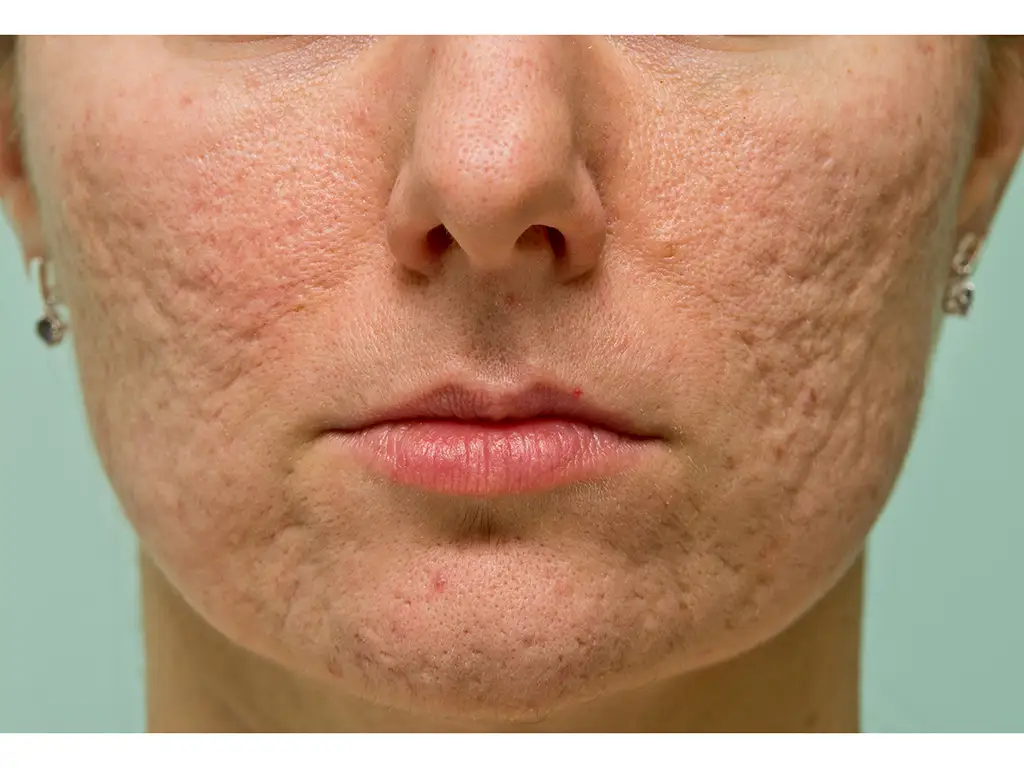
Your acne has finally settled, but your skin has not quite gone back to how it looked before. Perhaps you can still see darker marks where spots used to be. Maybe your skin looks uneven in certain lighting, or you can feel small dips and depressions when you run your fingers across your cheeks.
It is tempting to call all of these changes acne scars, but they are not necessarily the same thing. Some changes are related to pigmentation. Others involve the texture and structure of the skin itself. And if active acne is still present, that may need attention before we start thinking about correcting what it has left behind.
At Dr Liesel Medical Aesthetics, acne scar treatment starts with identifying exactly what we are looking at. Because the question is not simply, How do we get rid of acne scars?
The question is: What has acne actually left behind in your skin?
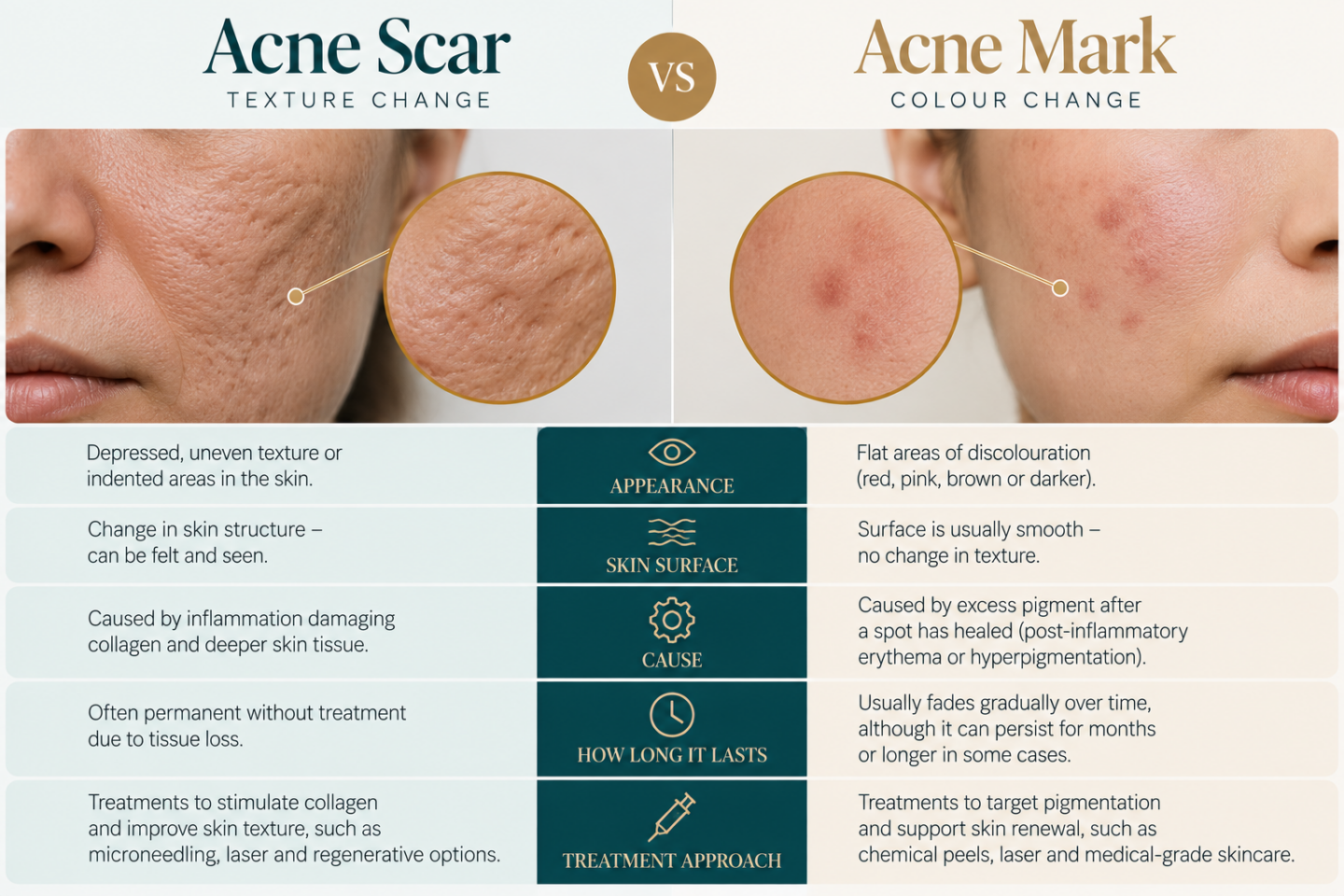
Is It an Acne Scar or an Acne Mark?
Not every mark left behind by acne is a true scar. Understanding whether you are seeing a change in skin texture or colour is an important first step in deciding which treatment approach may be most appropriate.
Why Do Some Spots Leave Scars and Others Don’t?
When acne becomes inflamed, the inflammation can extend into deeper layers of the skin and damage collagen and surrounding tissue. Your skin then has to repair that damage.
If sufficient collagen is not produced during healing, an area of tissue loss can remain, creating the depressed or indented appearance associated with some acne scars.
The likelihood of this happening can be influenced by:
- how deep the inflammation is
- how long acne remains active
- your individual healing response
- genetics
- picking or squeezing spots, which can increase inflammation and tissue damage
This is also why getting persistent inflammatory acne under control matters. Repeated inflammation can mean repeated opportunities for scarring to develop.
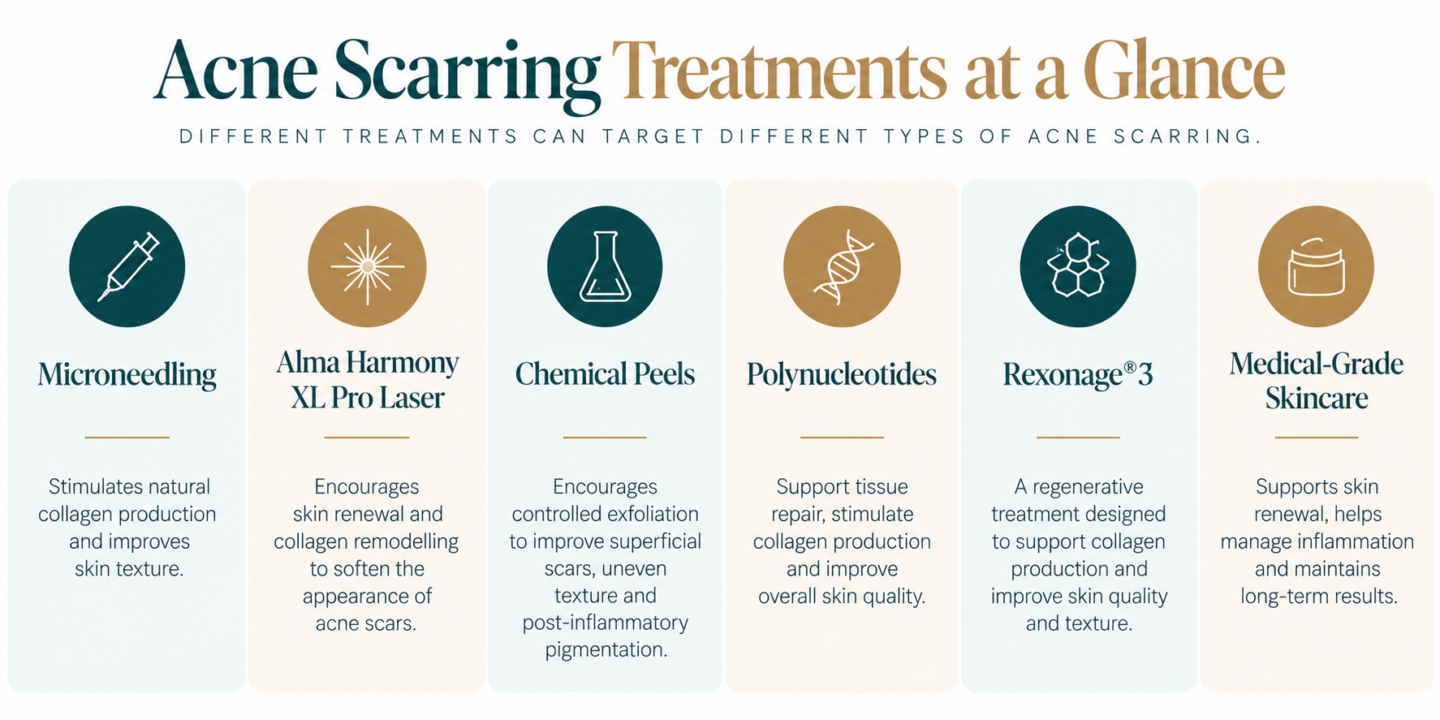
What Treatments Can Improve Acne Scarring?
Rather than thinking about one “best” acne scar treatment, it can be more useful to think about what needs improving.
If We Need to Stimulate Collagen
Microneedling creates controlled micro-injuries within the skin, triggering a natural healing response and encouraging new collagen production.
Over a course of treatment, this may help improve uneven texture and soften the appearance of selected acne scars.
Because collagen remodelling takes time, improvement develops progressively rather than immediately after treatment.
If We Need More Intensive Skin Remodelling
Alma Harmony XL Pro Laser provides laser technology that can be tailored to concerns including acne scarring and uneven texture.
By creating a controlled response within the skin, laser treatment can encourage skin renewal and collagen remodelling.
Whether laser is appropriate depends on the characteristics of your scarring and your skin, which is why assessment comes first.
If Surface Texture or Pigmentation Is Part of the Problem
Chemical peels work differently.
By encouraging controlled exfoliation and skin renewal, they may be useful where superficial textural changes or post-inflammatory pigmentation are contributing to an uneven complexion.
They are not interchangeable with treatments designed to remodel deeper scars, which is another reason identifying what you are seeing matters.
If Skin Repair and Tissue Quality Need Support
Regenerative treatments may also have a role within an acne scar treatment plan.
Polynucleotides support tissue repair and collagen production and may be considered when improving overall skin quality is part of the objective.
Rexonage®3 is another regenerative option designed to support collagen production and tissue quality, particularly where scarring is accompanied by uneven texture or reduced skin quality.
These treatments may complement a wider plan rather than acting as a replacement for resurfacing or collagen-remodelling procedures where these are required.
Where Does Skincare Fit In?
Skincare might not sound as exciting as laser or microneedling, but it is an important part of managing acne-prone and scarred skin.
Medical-grade skincare may be used to support skin renewal, inflammation control, collagen production and overall skin health.
It can also help us prepare the skin for treatment and support it afterwards.
Most importantly, if breakouts are continuing, managing the skin appropriately can help reduce ongoing inflammation rather than concentrating solely on scars while new ones are still developing.
Should Active Acne Be Treated Before Acne Scars?
If acne is still actively inflamed, this needs to be taken into account. There is little benefit in concentrating entirely on old scars while significant inflammation continues to create the potential for new ones.
That does not mean every patient follows exactly the same sequence. It means we need to understand where your skin is now, rather than treating it as though the acne journey has already finished.
Your treatment plan may therefore include managing current skin health before, alongside or as part of a longer-term approach to scarring.
Can Acne Scars Be Completely Removed?
Established acne scars cannot always be completely removed. Professional treatment is generally aimed at making them less noticeable, improving skin texture and supporting healthier-looking skin.
How much improvement is possible depends on factors including the type and depth of the scars, your skin and how it responds to treatment.
For some patients, combining approaches can be useful because different treatments perform different jobs.
The important thing is that there is a reason for each treatment within the plan rather than simply layering procedures together.
Frequently Asked Questions
Will Acne Scars Fade on Their Own?
Changes in colour left after acne may gradually become less noticeable, but established scars involving changes in skin texture are less likely to disappear without treatment.
Is Microneedling or Laser Better for Acne Scars?
Neither is automatically “better”. Microneedling and laser work differently, and suitability depends on the type and depth of scarring, your skin and what we are trying to improve.
Can Old Acne Scars Still Be Treated?
Yes. Long-standing scars may still respond to treatments designed to stimulate collagen and encourage skin remodelling. The degree of improvement varies between patients.
Can Picking Spots Cause Acne Scars?
Picking and squeezing can increase inflammation and damage surrounding tissue, which may increase the likelihood of scarring. Avoiding manipulation is particularly important with inflamed lesions.
How Many Treatments Will I Need?
This depends on the type and severity of your scarring and the treatment being used. Acne scar improvement is often a gradual process, so a course of treatment may be recommended rather than a single session.
What Has Your Acne Left Behind?
If your breakouts have settled but your skin is still showing the evidence, the first step is not choosing between microneedling, laser or a peel.
It is working out what you are actually seeing.
At Dr Liesel Medical Aesthetics, we can assess whether your concern is predominantly scarring, pigmentation, uneven texture or a combination of these changes, before creating a treatment plan around your skin.
Book a consultation with Dr Liesel Medical Aesthetics to have your acne scarring assessed and discuss which treatment options may be appropriate for you.